2024 Fellows


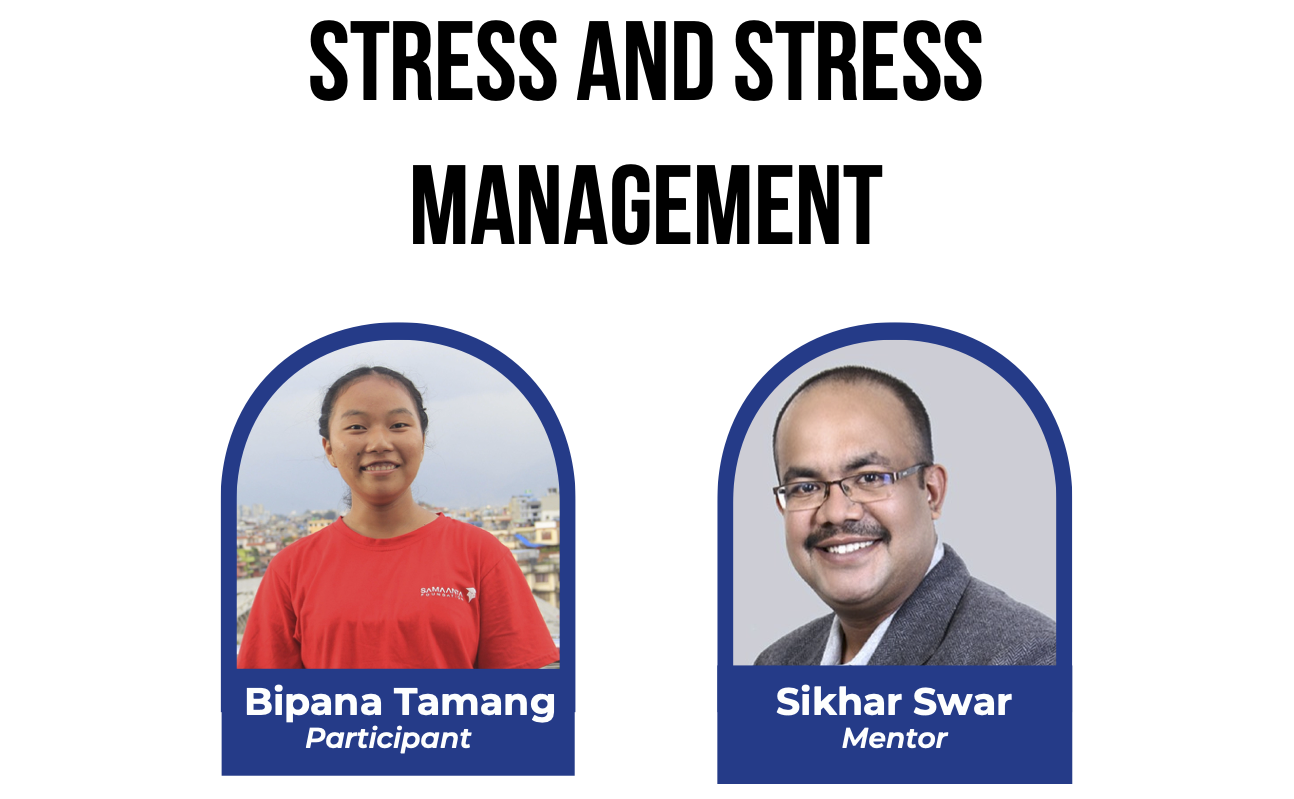
<ul><li>Organized the awareness session with ~45 students about stress, its consequences and practical ways for stress management. </li><li>Shared personal experience of having stress and created an environment for participants to share their personal experience</li><li>Distributed educational materials for future reference and use</li><li>Learnt problem solving, negotiation with stakeholders, expanded network</li></ul>
        Motivated by her own experiences with stress, Bipana Tamang chose to open up a conversation around mental health among students. She led an awareness session with 45 students, explaining the signs and effects of stress and offering practical strategies for management. Bipana shared her personal story to help others feel comfortable, and three participants opened up about their own struggles in response. She also distributed educational materials for ongoing support. Through the project, Bipana developed skills in stakeholder engagement, community problem-solving, and built a stronger local network for mental wellness.
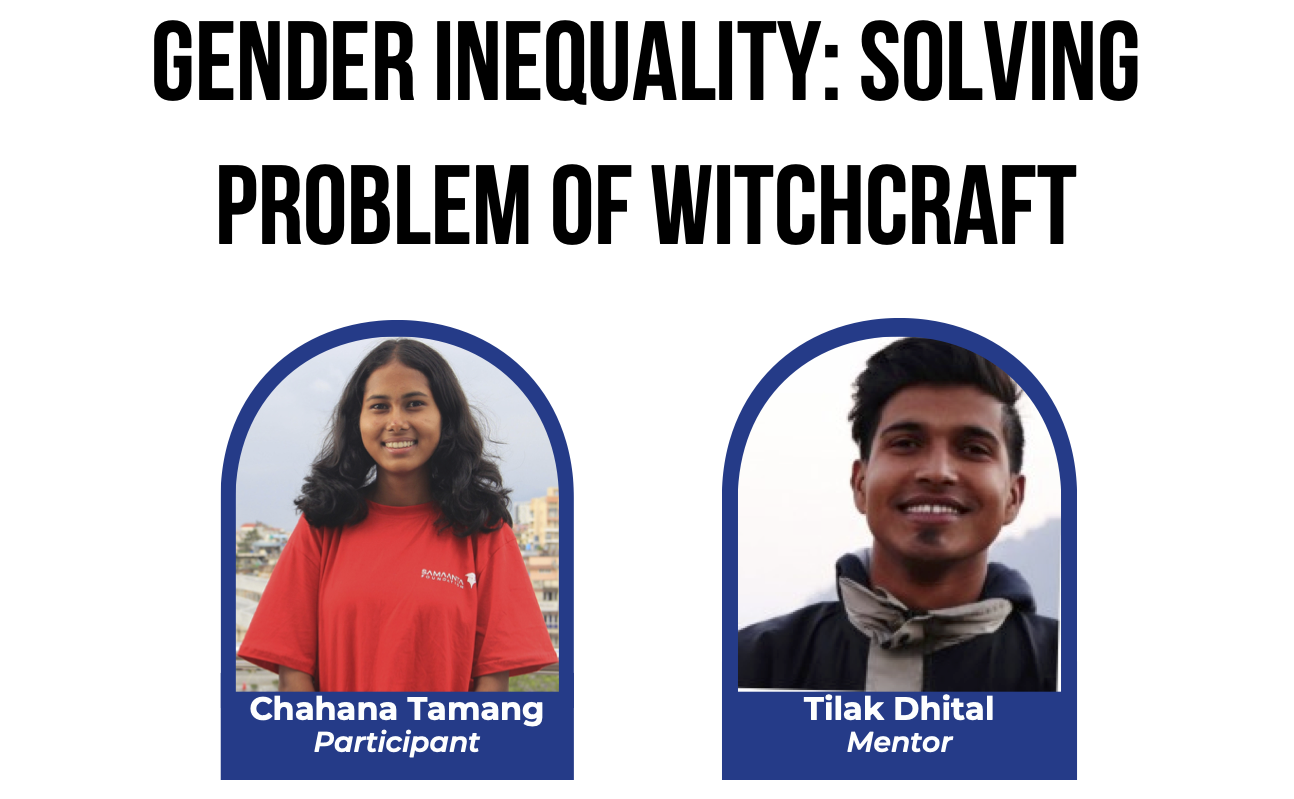
<ul><li>Conducted a session with 30-40 students in Shree Azad Secondary School, Panchkhal discussing impacts of witchcraft accusations using individual and group activities. </li><li>Raised awareness among students who were previously unaware about the issue and/or its impact.</li><li> Learnt about social, legal and personal implications, adapting project to different situations and audiences, engaging others in topics, presentation skills, getting feedback and continuous improvement</li></ul>
        In Kavrepalanchok, Chahana Tamang tackled a deeply rooted and complex issue: accusations of witchcraft. Through her session with 30–40 students at Shree Azad Secondary School at Panchkhal she used group discussions and personal reflections to raise awareness of the harmful effects of this practice—particularly on women. The conversations helped students recognize the cultural dynamics at play and the legal and social consequences of such accusations. Chahana gained experience in tailoring her message to different audiences, collecting feedback, and improving her presentation and facilitation skills in real time.
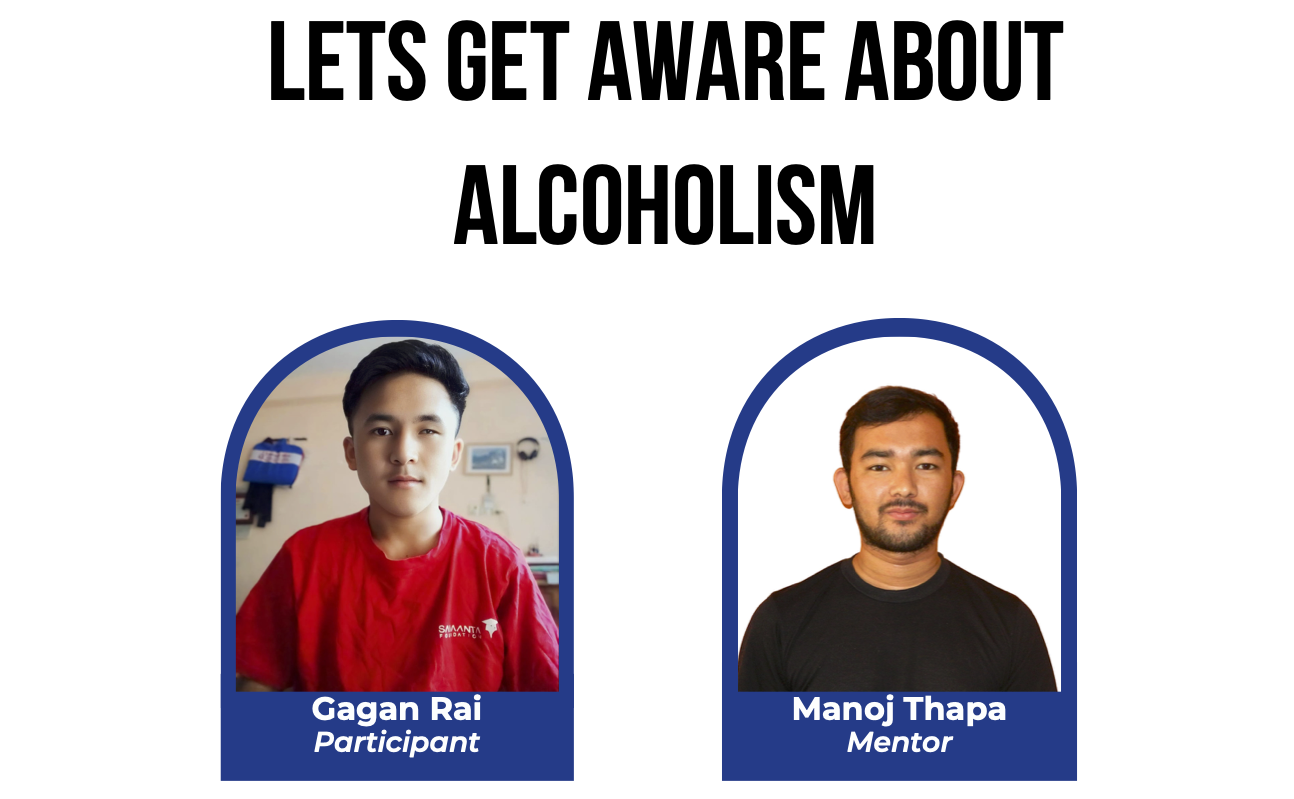
<ul><li>Grassroots-level engagement: Direct interaction with villagers (Langarche Gaun) through door-to-door invitations and individual explanations</li><li>Peer-led initiative: Young people educating their community - 18 participants</li><li>Multimedia approach: Combination of slides and video content</li><li>Learning - community engagement, overcoming project challenges, communication, door-door campaigns, team collaboration, budgeting</li></ul>
        Gagan Rai’s project tackled alcohol misuse in Langarche Gaun, a village in Sindhupalchok district. Through grassroots-level engagement, he led an awareness campaign called “Let’s Get Aware About Alcoholism,” using videos, slides, and direct conversations to highlight the social and health effects of excessive drinking. Gagan took a door-to-door approach to invite villagers personally and ran a peer-led session with 18 youth participants. By leveraging local networks and creating a comfortable learning space, he sparked meaningful dialogue and reflection in the community.
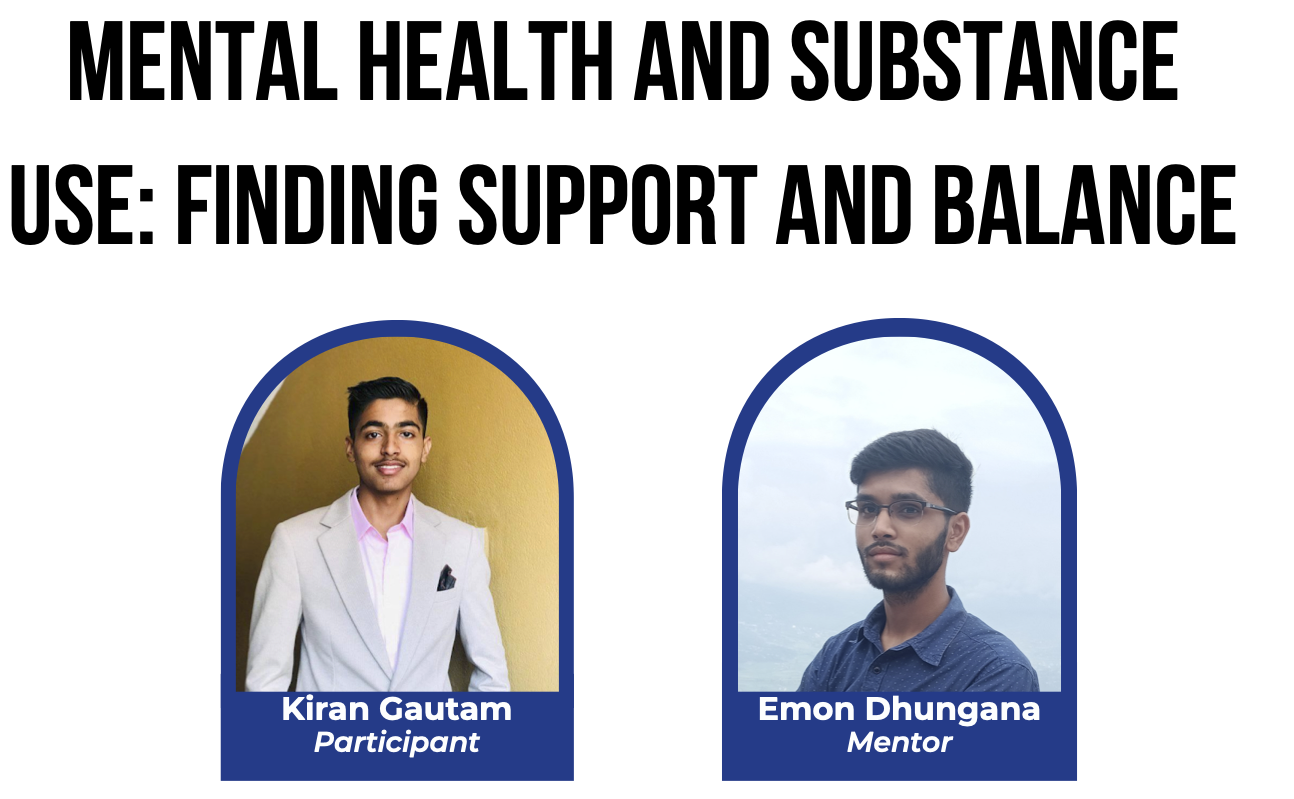
<ul><li>Project approach: Our project educated students about alcohol’s effects and mental health through interactive games and discussions. </li><li>Created a safe environment for students to openly share their thoughts with a focus on engaging students with relatable, peer driven conversations rather than just delivering facts.</li><li> Improved presentation Skills, Canva, Communication, Proposal writing, creating and managing Budget</li></ul>
        Kiran’s project focused on the intersection of mental health and substance use, topics he felt were often stigmatized or overlooked among young people. He led interactive sessions that combined facts with games and peer-led discussions, allowing students to open up in a safe environment. Rather than lecturing, Kiran created a space for dialogue, where students could relate to the issues being discussed. From the project, he developed skills in presentation, Canva design, communication, proposal writing, and budget management—tools that will help him continue this work in the future.
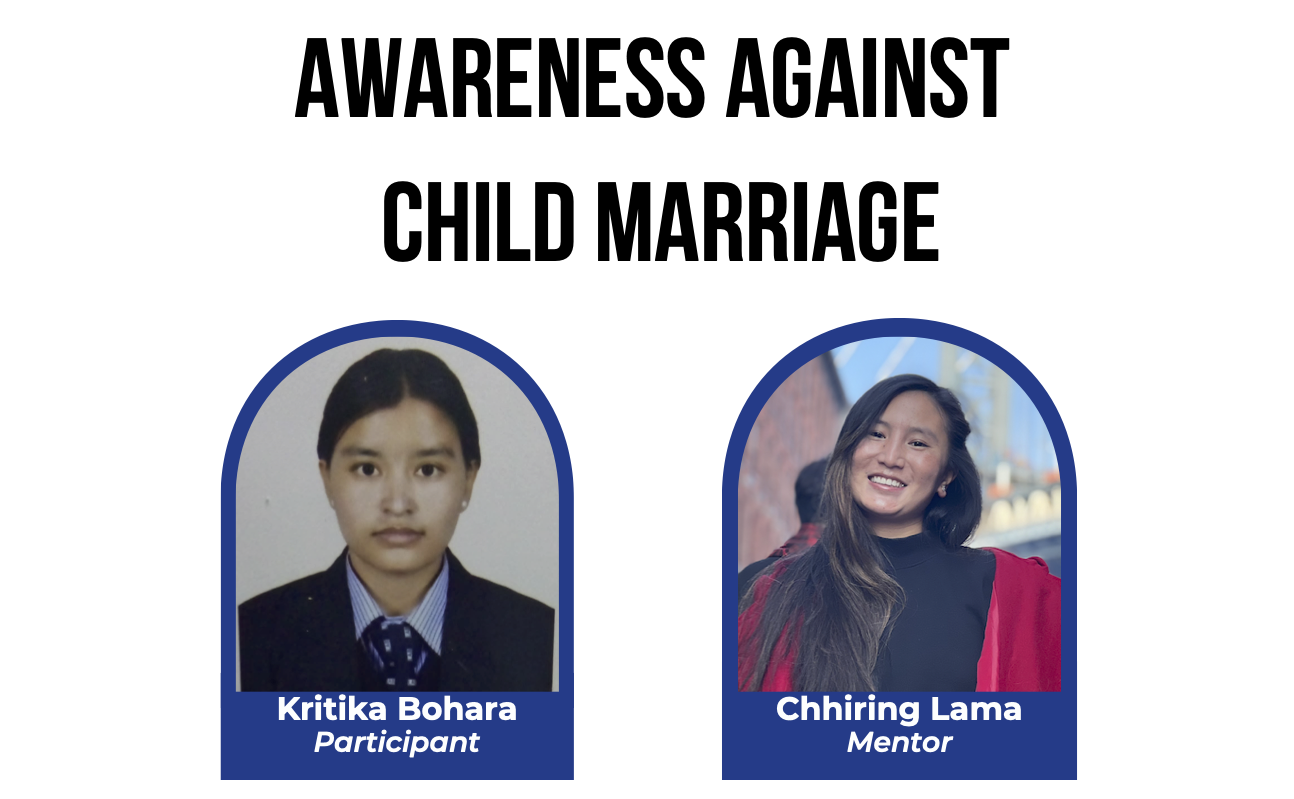
<ul><li>Aim: to raise awareness and education related to child marriage in adolescent Humli girls.</li><li>Engaged 45 students in disussing impacts and prevention </li><li>Learnt: Proper project planning skill, Public speaking, Technical tools such as Google Slides, Google Doc, etc., Problem solving skills</li></ul>
        Inspired by a friend who married young, Kritika Bohora designed a project to raise awareness of child marriage among adolescent girls from Humla. Now studying in Lalitpur, she reached 45 students to discuss the physical, emotional, and educational consequences of early marriage—and encouraged participants to explore alternatives and self-empowerment. Her clear communication and use of tools like Google Slides and Docs helped her engage the group effectively. Kritika developed strong public speaking and project planning skills, along with the confidence to turn personal motivation into community impact.
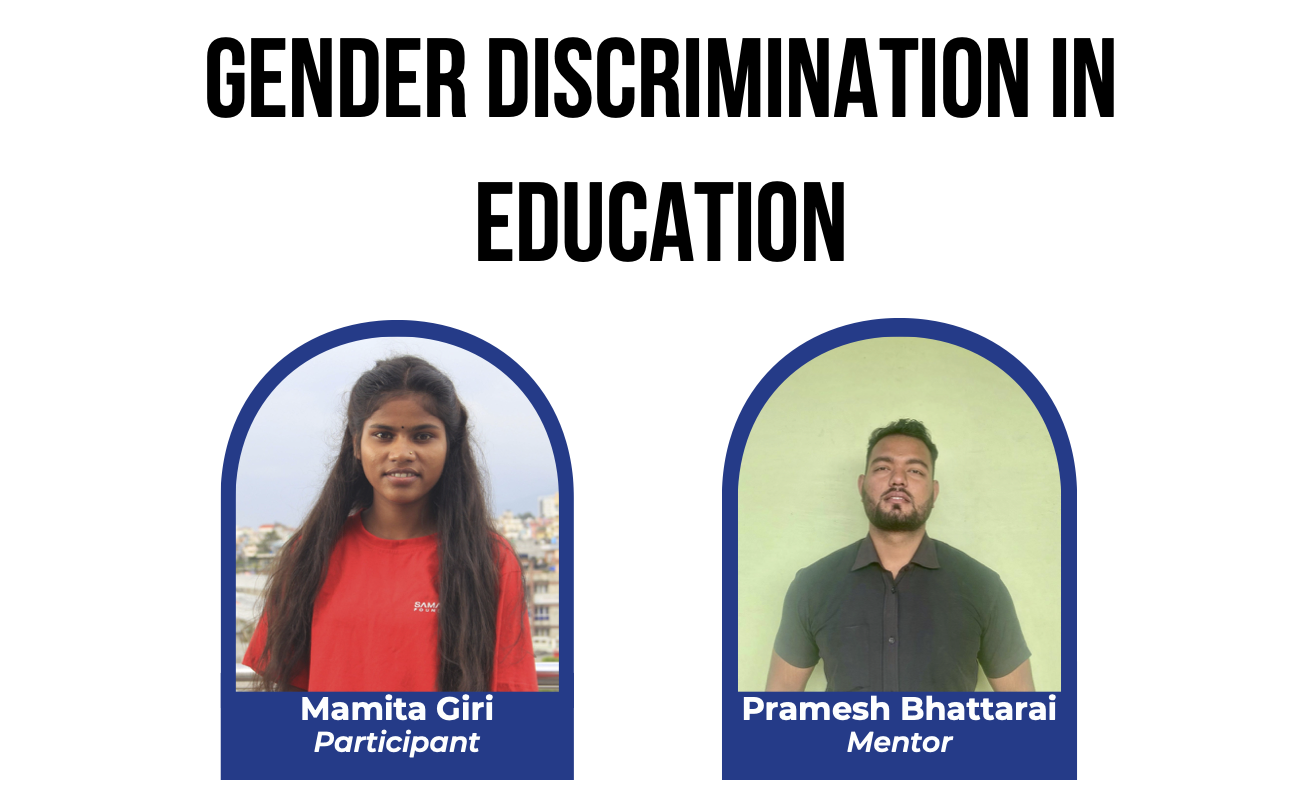
<ul><li>Coducted a survey: 1-1 survey interview to understand the present condition of education in her community and reasons for dropout.</li><li>Presented findings with 68 students 12-18 years where students also shared their experiences and increased resolve to support each other</li><li>Learnt: canva, proposal writing, stakeholder outreach, project creation and management, presentation, confidence</li></ul>
        Driven to confront inequality in her community, Mamita Giri led a project addressing gender discrimination in education. Starting with one-on-one interviews, she documented local students’ experiences with school dropout and gender bias. She then presented her findings to a group of 68 adolescents, creating a platform for participants to share their stories and reflect on how to support one another moving forward. Mamita sharpened her skills in Canva, proposal writing, and stakeholder outreach, and left the project with greater confidence in her voice and ability to drive change.
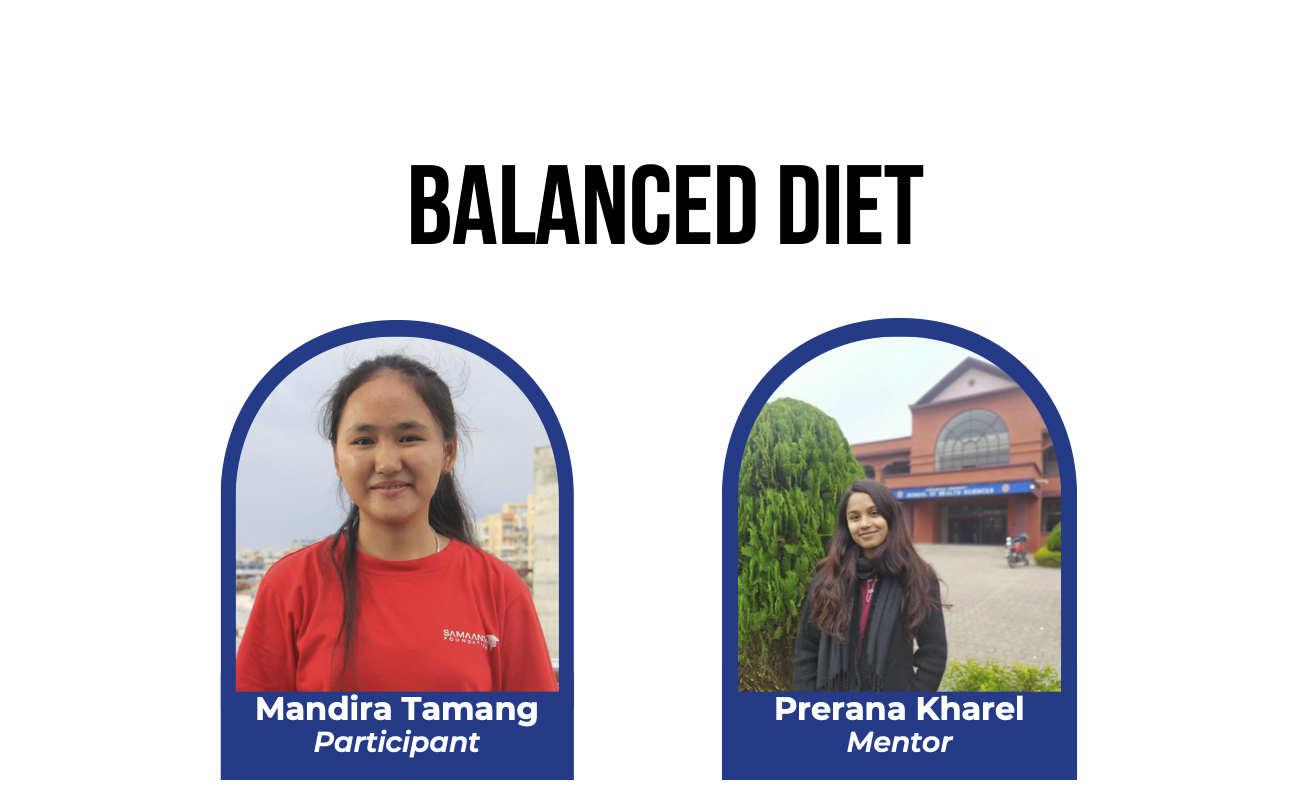
<ul><li>Presented on Malnutrition among 19 students of grade 9 including its definition, components, importance, misconception, effects of not having it etc.</li><li>Conducted pre and post surveys on balanced diet before and after the presentation. </li><li>Learned more about the topic herself, gained communication skills and confidence, learnt hard skills around data collection, analysis and presentation, problem solving and project management skills</li></ul>
        With an academic interest in biology and a passion for youth education, Mandira led a project on balanced diets in her home district of Sindhupalchowk. She gave a presentation to 19 ninth-grade students at a local school, covering key topics like malnutrition, its causes, and the importance of dietary balance. To assess impact, she conducted pre- and post-surveys and facilitated in-session quizzes to keep students engaged. Many students shared that they would take what they learned back to their families. Mandira developed strong communication and presentation skills through the project and gained hands-on experience in data collection, analysis, and project management.
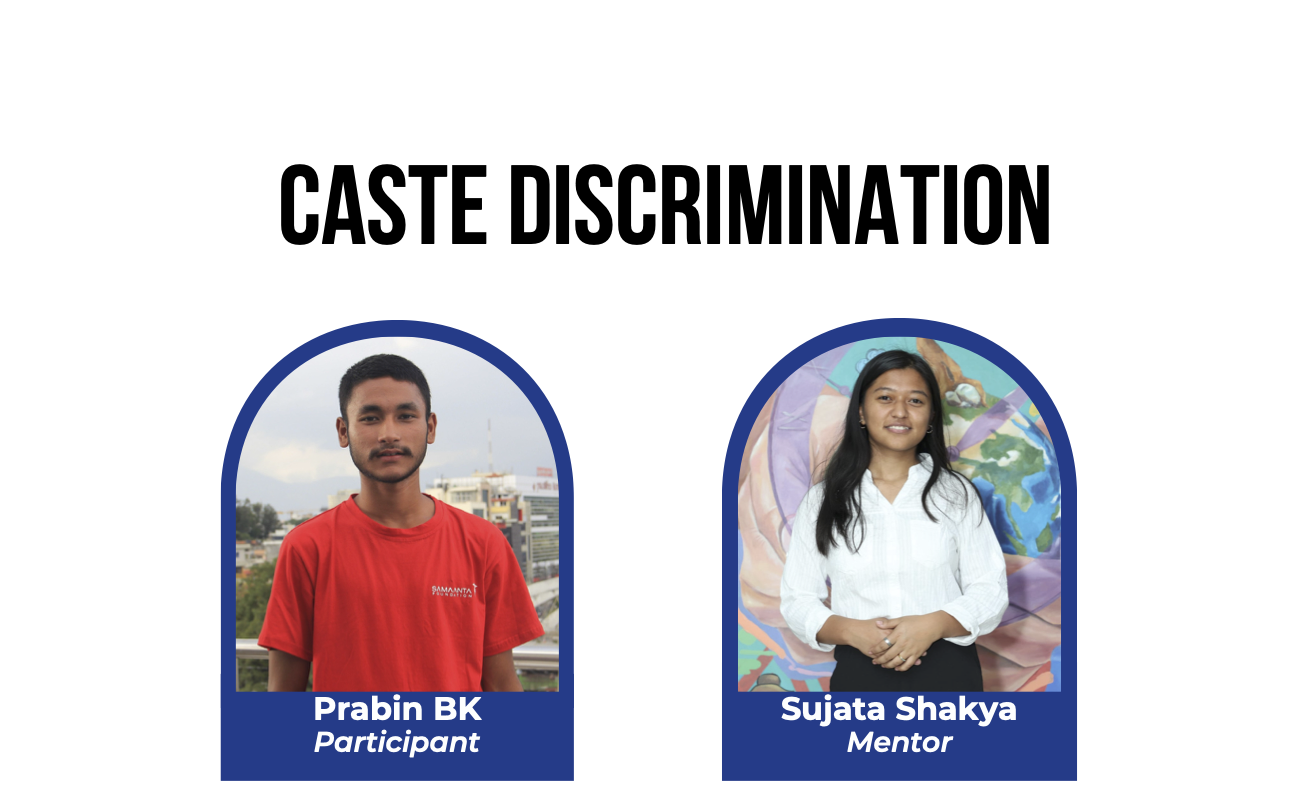
<ul><li>Joined program to contribute to community and learn deeply about behaviors he sees in the community, especially around caste discrimination</li><li>Held an awareness program to inform and involve students to share personal experiences. </li><li>Research the topic indetail and gathered important data and facts, feedback from students using surveys and interviews.</li><li>Engaged 30-40 students in Azag Secondary School at Panchkhal, Kavrepalanchok District</li><li>Learnt to engage diverse audiences, collaborate with other students to execute project, getting and adopting feedback, presenting difficult topics</li></ul>
        From Lamjung district, Prabin BK took on the challenge of caste discrimination—an issue he had seen firsthand and wanted to understand deeper himself. He collected data through a survey and conducted an awareness session with 30–40 students at Azag Secondary School in Panchkhal, using personal storytelling, data, and student feedback to guide the conversation. His project created space for reflection and honest dialogue, while also deepening his understanding of how caste-based biases affect everyday life.
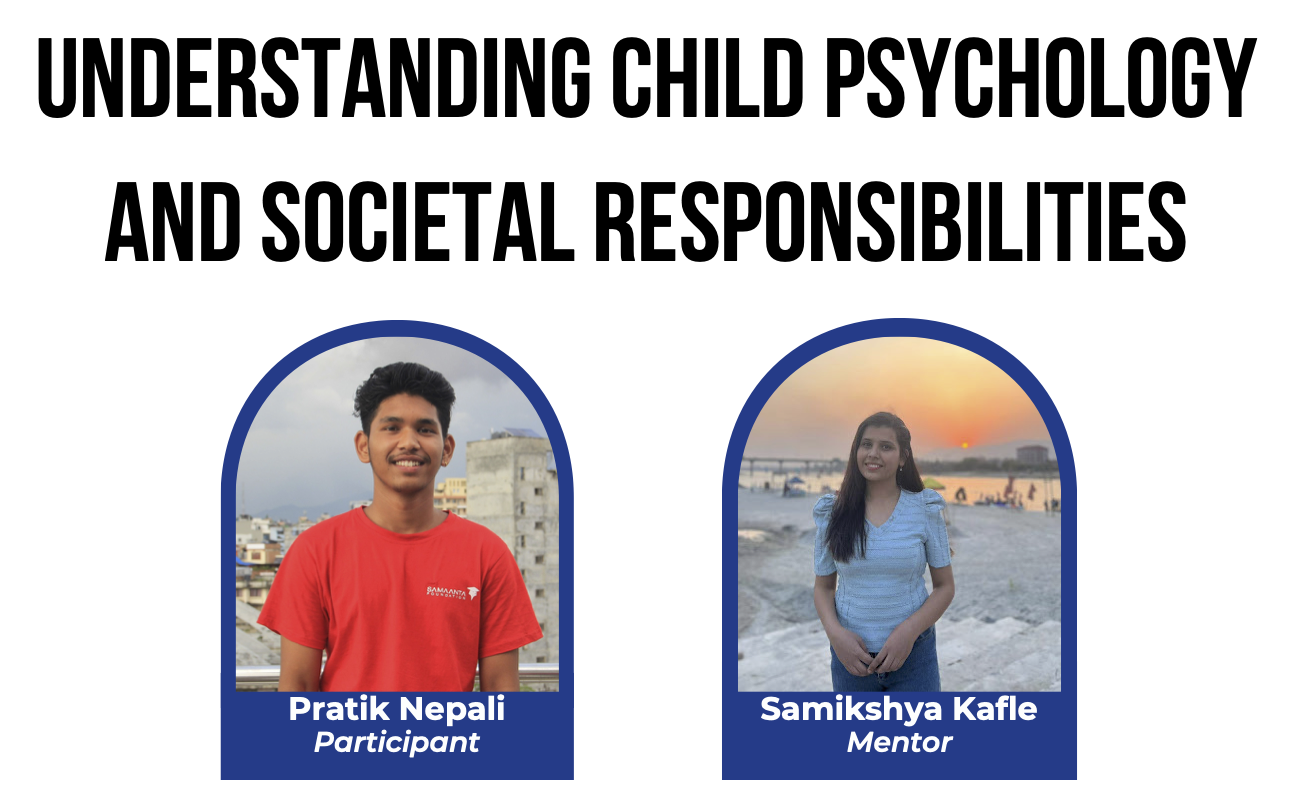
<ul><li>Problem context: In Nepal, over 80% of the children aged 1-14 experience some form of corporal discipline at home.</li><li>Presented to 20 people in the community about parenting styeles, child psychology and learning behaviour of children.</li><li>Interacted through audio-visual methods, personal-experience rooted discussions</li><li>Learnt: problem solving and critical thinking, gained confidence and enthusiasm about doing projects, speaking skills, research skills</li></ul>
        With a passion for psychology and social responsibility, Pratik Nepali led a powerful session in Sindhupalchowk on child development and parenting. In Nepal, over 80% of children experience corporal punishment at home—a statistic Pratik sought to change through awareness and empathy. He gathered 20 community members to explore parenting styles, child psychology, and the unseen impacts of everyday behaviors. Using videos, presentations, and space for personal storytelling, he created an open, reflective environment. The project boosted his confidence, research abilities, and communication skills while deepening his commitment to child well-being.
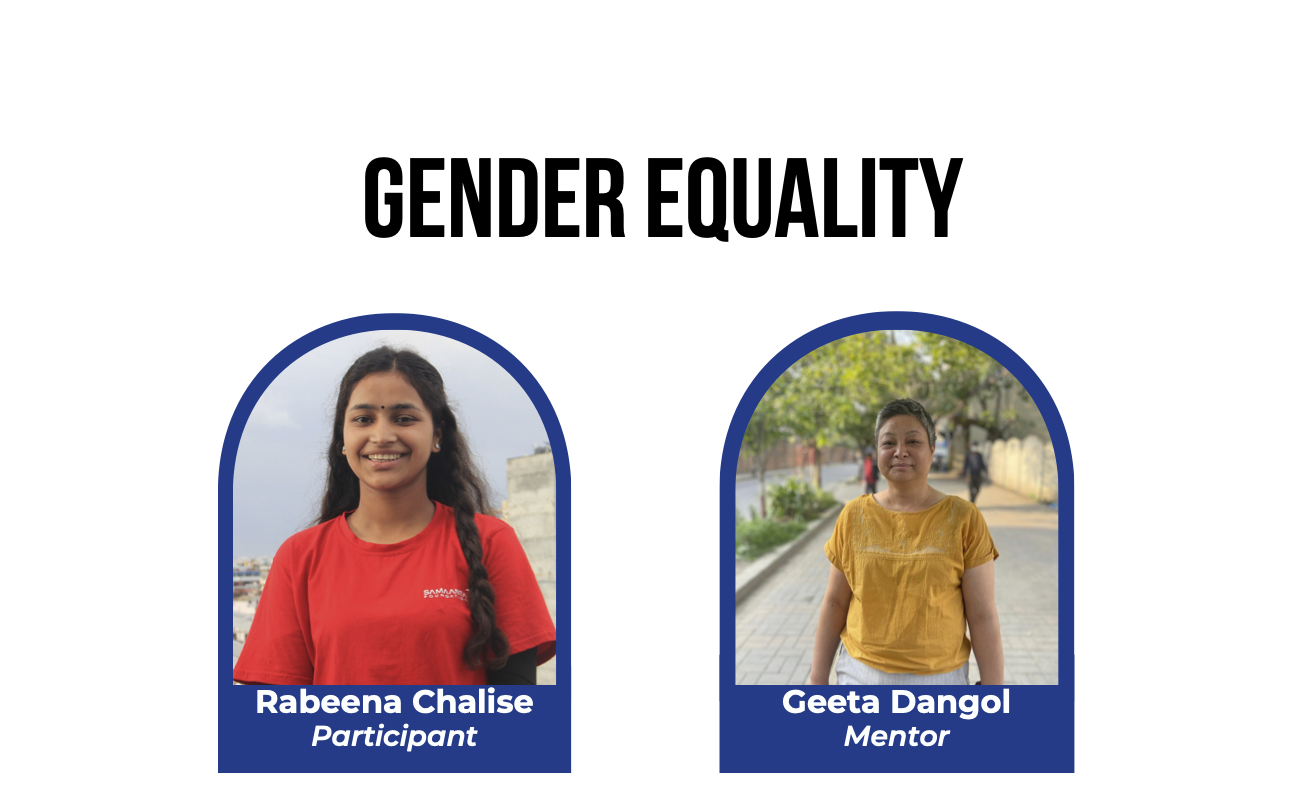
<ul><li> Group Activities:Discussions and activities about gender equality.</li><li>Individual Activities:Reflection on women’s roles in education and leadership. </li><li>Participant student gave positive feedback,understood gender inequality better ,and want to make a difference in their communities.</li><li> Learnt presentation skills, managing challenges, and deeper understanding of the topic</li></ul>
        Rabeena Chalise led a thoughtful project on gender equality at a local school, creating space for students to reflect on disparities in education, employment, and leadership. Through group discussions and individual activities, she encouraged both girls and boys to reimagine their roles in promoting gender equity. The sessions sparked meaningful conversations, and students shared positive feedback, expressing a desire to create change in their own communities. While navigating personal challenges during the project, Rabeena built confidence in her presentation skills and deepened her understanding of gender issues.
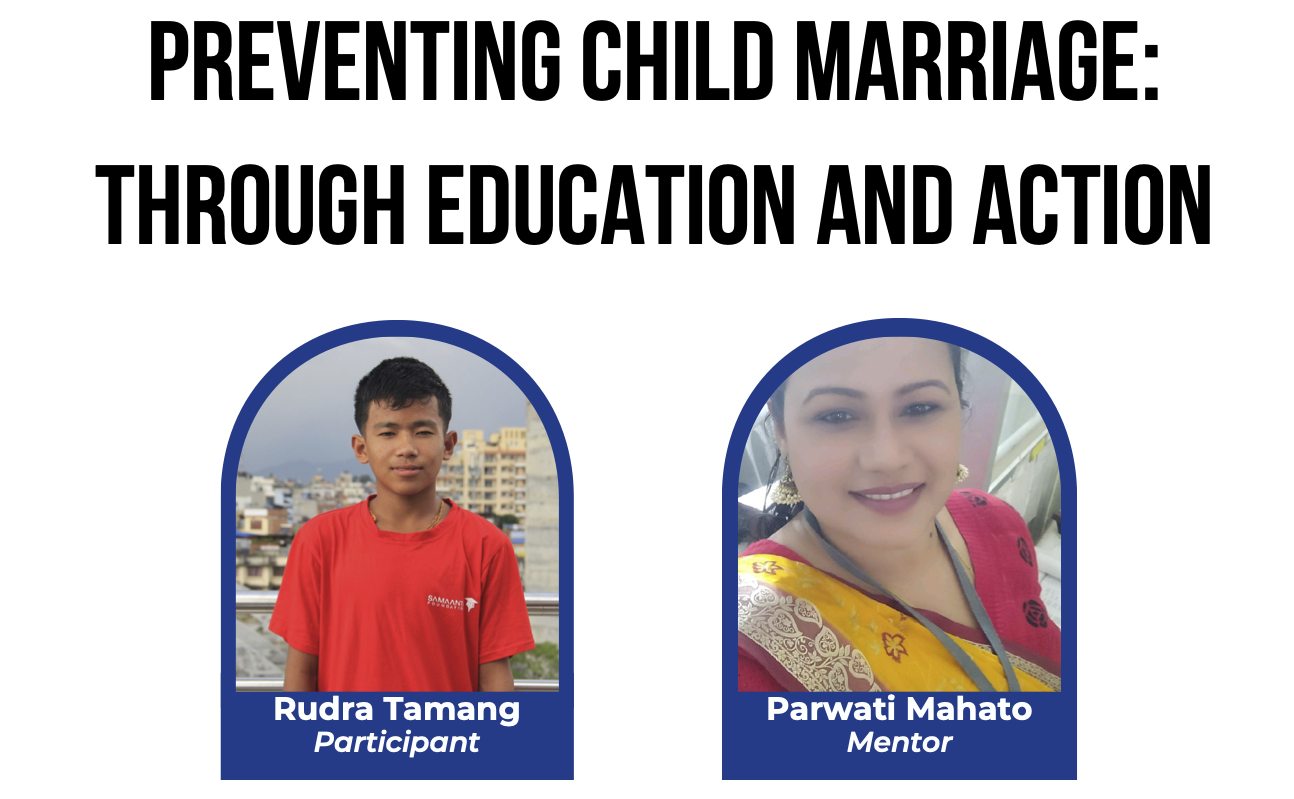
<ul><li>Target students: Grade 10 (24 participants) due to their tendency to drop out after SEE exams. Early marriage after SEE is a prevalent issue in his community.</li><li>Shared his personal stories, did interactive session with games, showed video titled focusing on the negative effects of child marriage on girls' health, education, and mental well-being and conducted reflection after. </li><li>Shared alternatives for students like scholarship and other opportunities for better future for the students </li><li>Learnt digital tools, developed confidence and skills like time management, communication, leadership, researching, presentation</li></ul>
        Rudra Tamang brought critical attention to the issue of child marriage through his project in Sindhupalchok. Targeting Grade 10 students—many of whom are at risk of dropping out and marrying early after the SEE exams—he used games, personal stories, and a powerful video titled “I Wonder Why I Got Married So Soon” to drive the message home. His session encouraged reflection and offered real alternatives like scholarships and educational opportunities.
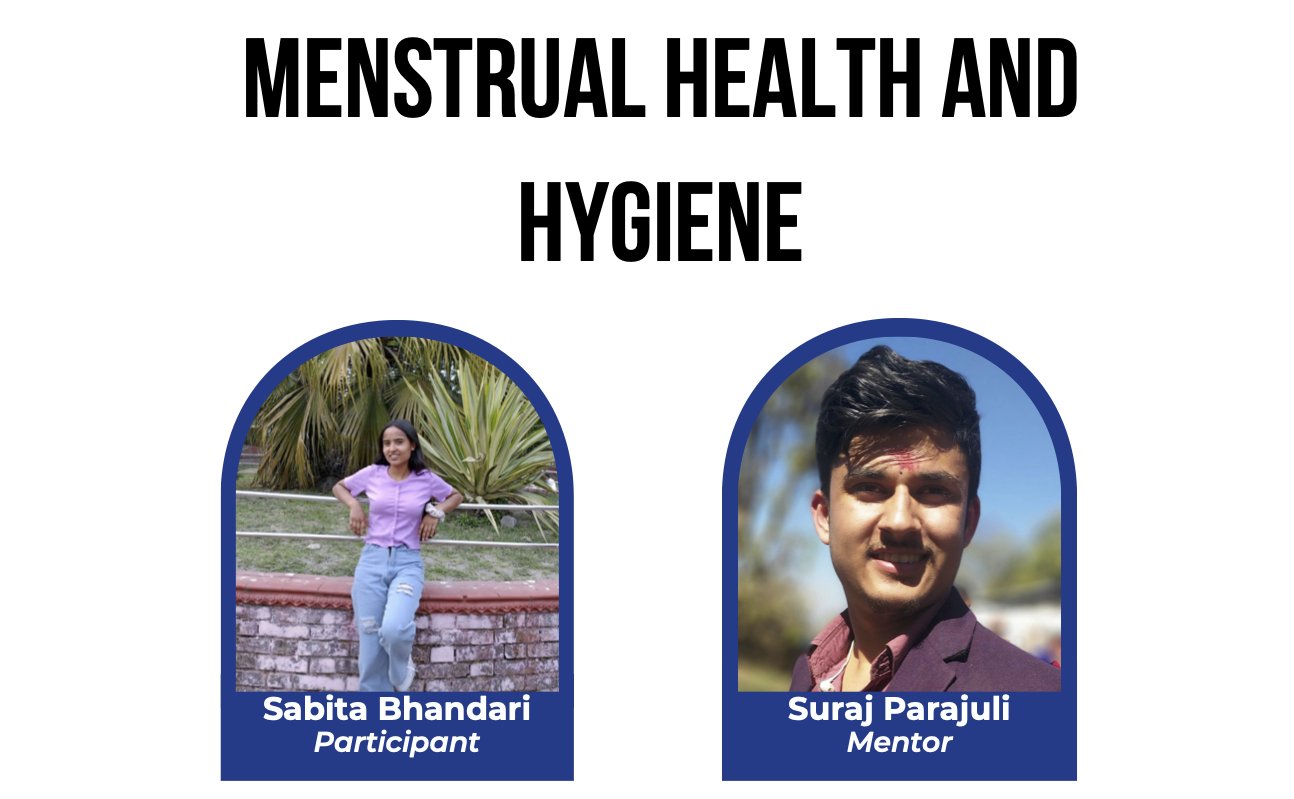
<ul><li>Goals: Short term - implement among Adolescent girls aged from 14 to 22 who transitioned from Humla to Kathmandu. Girls who received an awareness program will spread the knowledge to their community (women’s group, ward) through semi-formal communication.</li><li>Conducted session with 40 girls discussing health and hygiene</li><li>Shared share their experiences on the different myths and practices during menstruation in the session</li><li>Learnt communication, research, communication skills, got confident to present</li></ul>
        Growing up in Humla, where menstruation is steeped in harmful taboos like the illegal practice of Chhaupadi, Sabita was determined to change the narrative around menstrual health. Her project targeted adolescent girls aged 14–22 who had moved from Humla to Kathmandu. In a session with 40 participants, Sabita shared accurate health information, debunked myths, and created a supportive environment where girls could share their personal stories. Her long-term vision is for these girls to bring this knowledge back to their communities during visits home, creating a ripple effect of awareness.
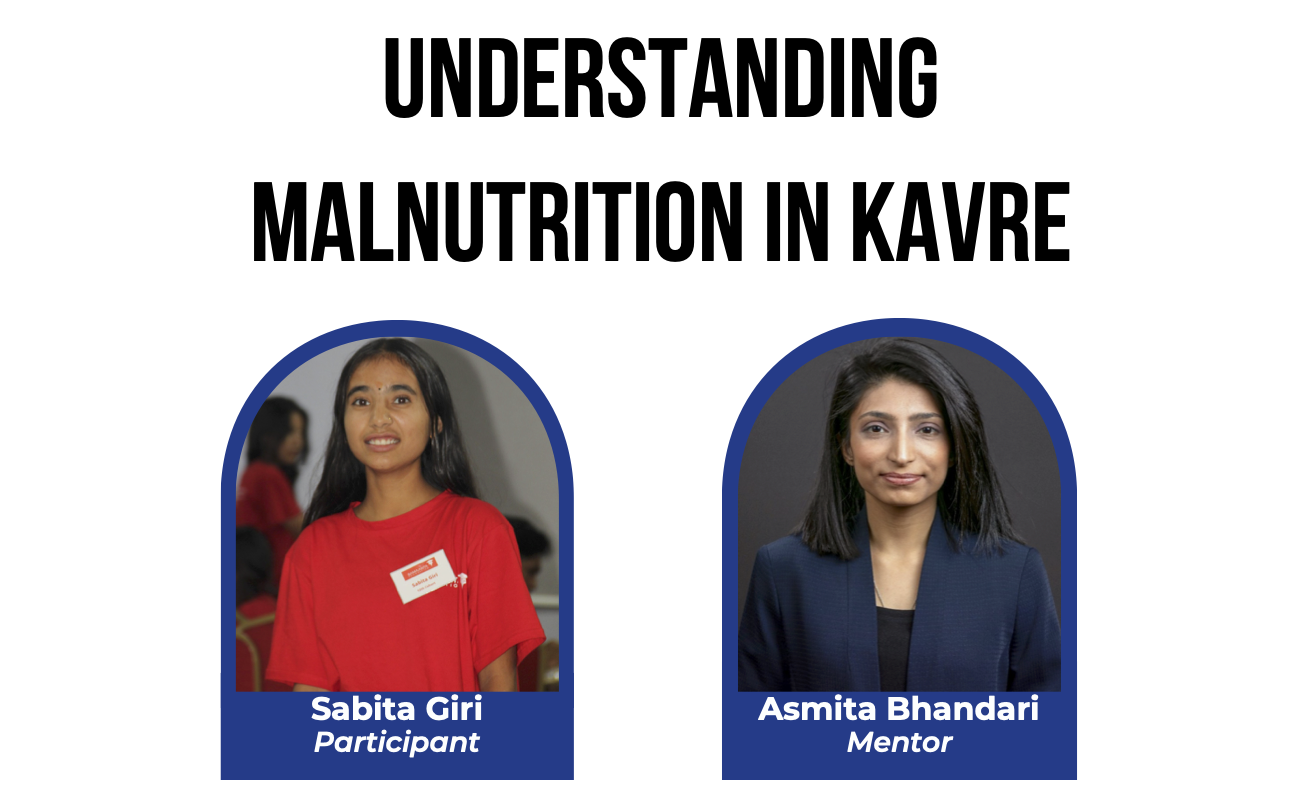
<ul><li>1-1 survey to understand the present condition of education in the present condition of malnutrition in the community and the causes.</li><li> Conducted a session in Aajat school in Kavrepalanchok district:  90 students impacted, Girls- 50 and Boys-40 with  Range of age 12 to 15 years</li><li>Learnt communication, presentation, negotiation and teamwork skills and gained confidence</li></ul>
        Sabita Giri tackled the issue of malnutrition by first understanding it through direct community engagement. She conducted one-on-one interviews to assess knowledge gaps and used those insights to design an awareness session called “Education for Teenagers.” Her implementation at Aajat School in Kavrepalanchok reached 90 students aged 12–15, with a nearly equal gender balance. Sabita covered the causes, consequences, and prevention of malnutrition, and promoted a more informed understanding of nutrition among adolescents. She developed critical skills in presentation, teamwork, communication, and negotiation through the process.
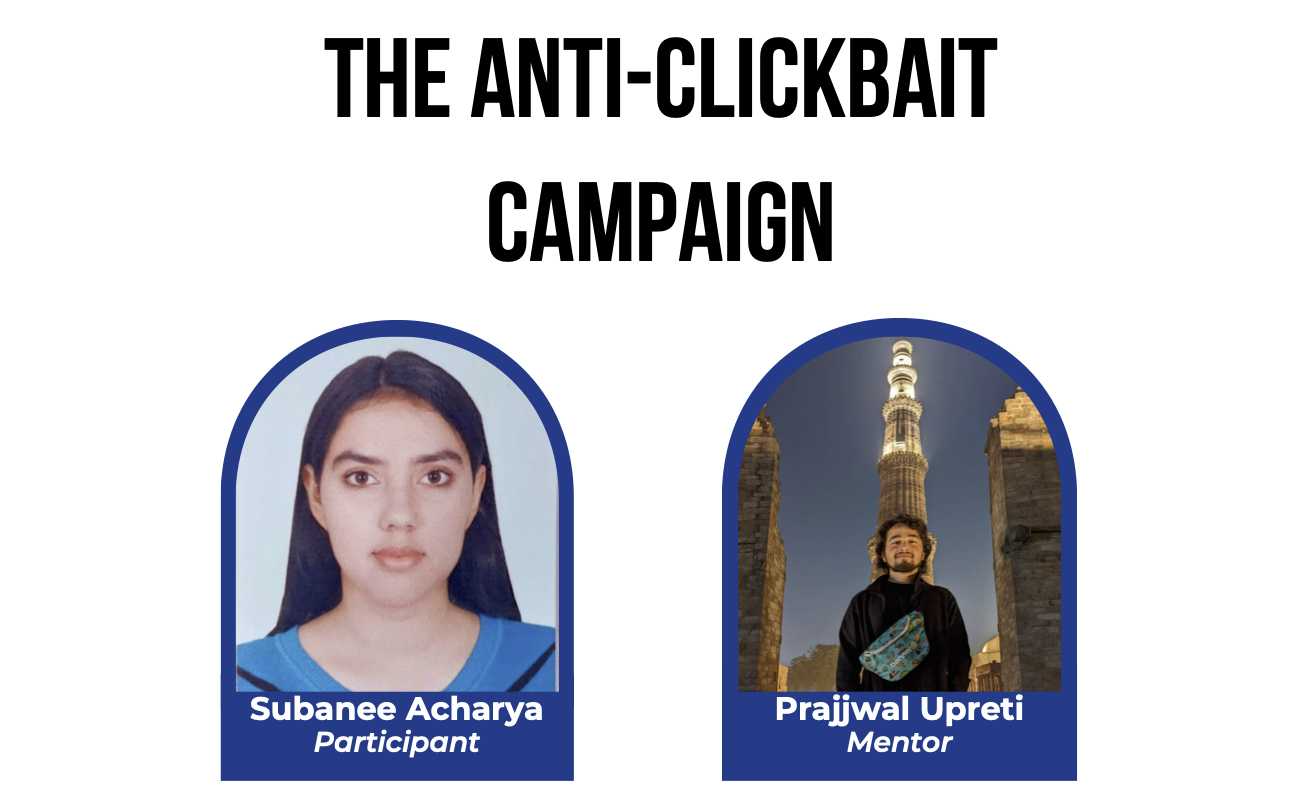
<ul><li>Aim: to improve digital literacy among middle school students by teaching them to secure their passwords and avoid clickbaits.</li><li>Approach: Awareness campaigns and surveys to establish baseline knowledge, Practical approach with hands on training with real scenarios related to securing passwords and avoiding clickbaits. </li><li>Reached 218 students aged 13-18, who didn't know what clickbait meant, 30% had their social media hacked, and 40% used weak passwords </li><li>Learnt: community engagement, communication, networking, leadership qualities, crisis management, project management</li></ul>
        Subanee’s “Anti-Clickbait Campaign” aimed to boost digital safety among middle school students. Seeing how vulnerable young users were to online threats, she designed a hands-on workshop on password security and identifying clickbait. After surveying participants to assess their baseline knowledge, she facilitated training sessions with real-life scenarios where students practiced secure habits on the spot. The program reached 218 students aged 13–18—many of whom had previously used weak passwords or been hacked.

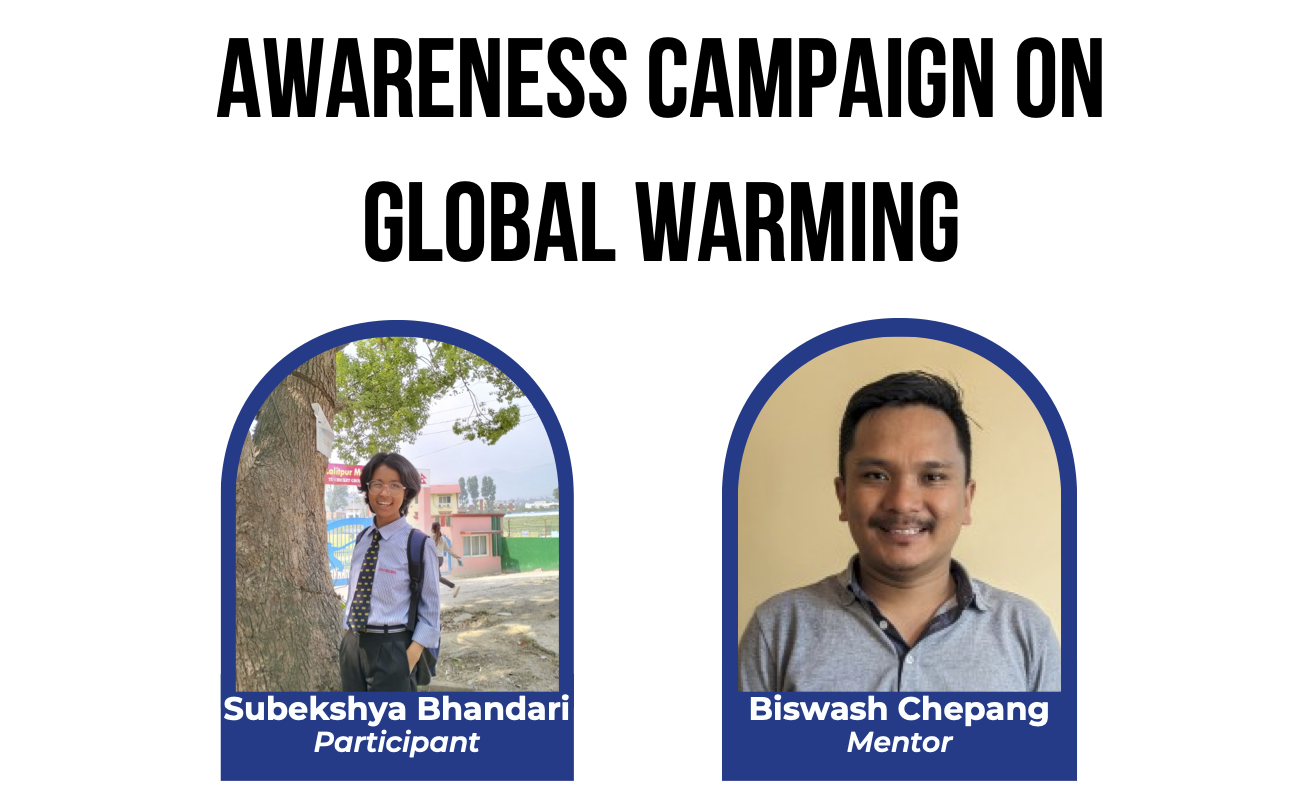
        <ul> <li>Implemented an awareness session at Namaste children fund.</li>
        <li>Total member participate = 45 (21 school level, and 24 college students) </li>
        <li>Participants got the chance to learn about global warming, climate change and its impact. </li>
        <li>She was excited about learning about environmental issues herself, got to collaborate deeper with friends, build confidence and develop presentation and communication skills. </li></ul>
        Subeskya has long been interested in environmental issues, and her project on global warming gave her an opportunity to both deepen her own understanding and raise awareness in her community. She organized an interactive awareness session at Namaste Children’s Fund, engaging 45 participants from school, college, and bachelor levels. The session focused on climate change, its causes, and consequences — equipping attendees with the knowledge to become more conscious stewards of the planet. Subeskya also gained valuable experience in collaboration, public speaking, and communication, and felt more confident as a result of seeing her peers respond to her efforts.
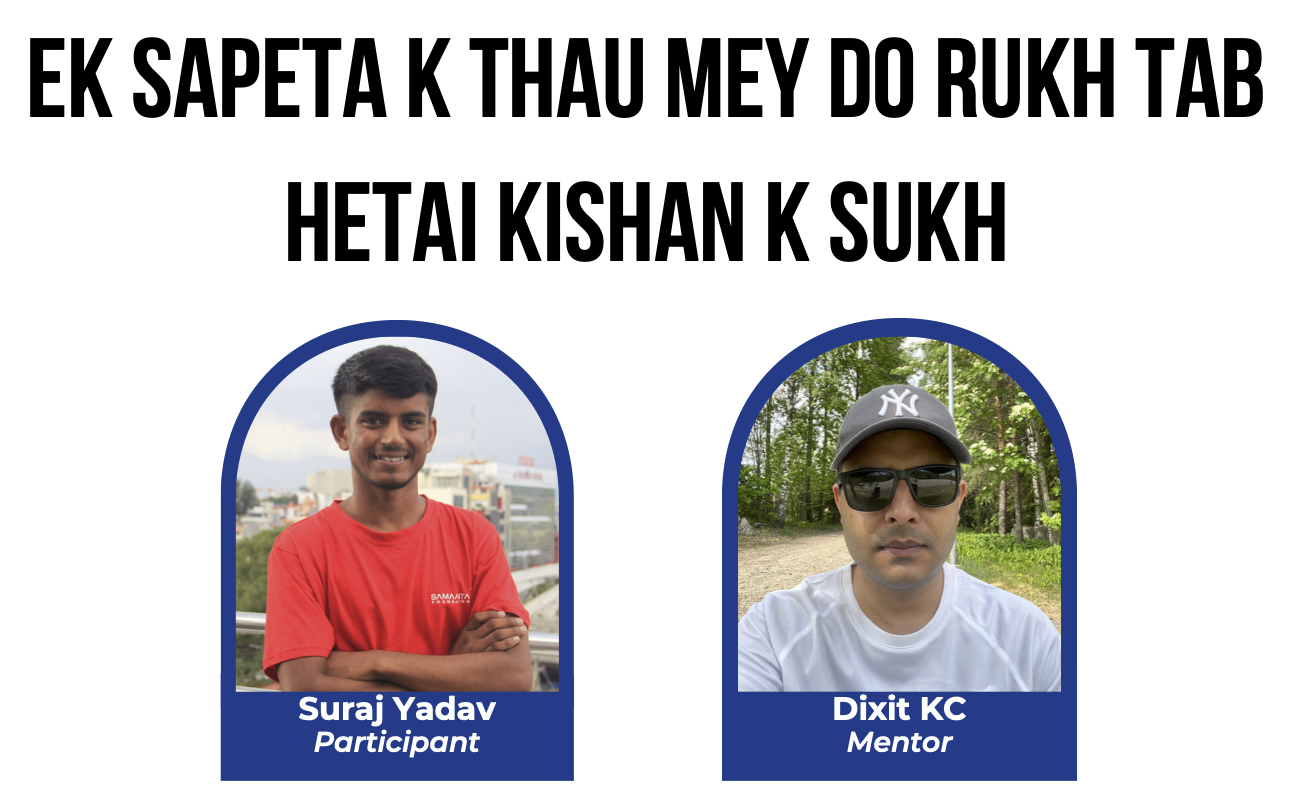
<ul> <li>Reducing impact of invasive “Sapeta” trees in his village by replacing the species with local mango trees that can provide locals with income and food</li><li>Distributed mango, lychee and jackfruit saplings to 10 households and Planted 45 mango trees and replaces 22 sapeta trees, engaged 7-8 people to help implement</li><li>He learnt engaging effectively with community, problem solving, communication and applying theoretical concepts to practical solutions</li></ul>
        Suraj was inspired to take on an environmental challenge in his village of Dhanusha, where the invasive “Sapeta” tree was contributing to drought, soil degradation, and declining crop yields. His project, summarized by the slogan “Ek sapeta k thau mey do rukh, Tab hetai kishan k sukh,” focused on replacing Sapeta trees with native mango, lychee, and jackfruit saplings. Suraj distributed saplings to 10 households, planted 45 mango trees, and removed 22 Sapeta trees with help from local community members. Through the project, he gained experience in community organizing, communication, and applying practical solutions to local environmental problems. He hopes to scale his initiative and turn his village into a thriving hub for mango production and export.
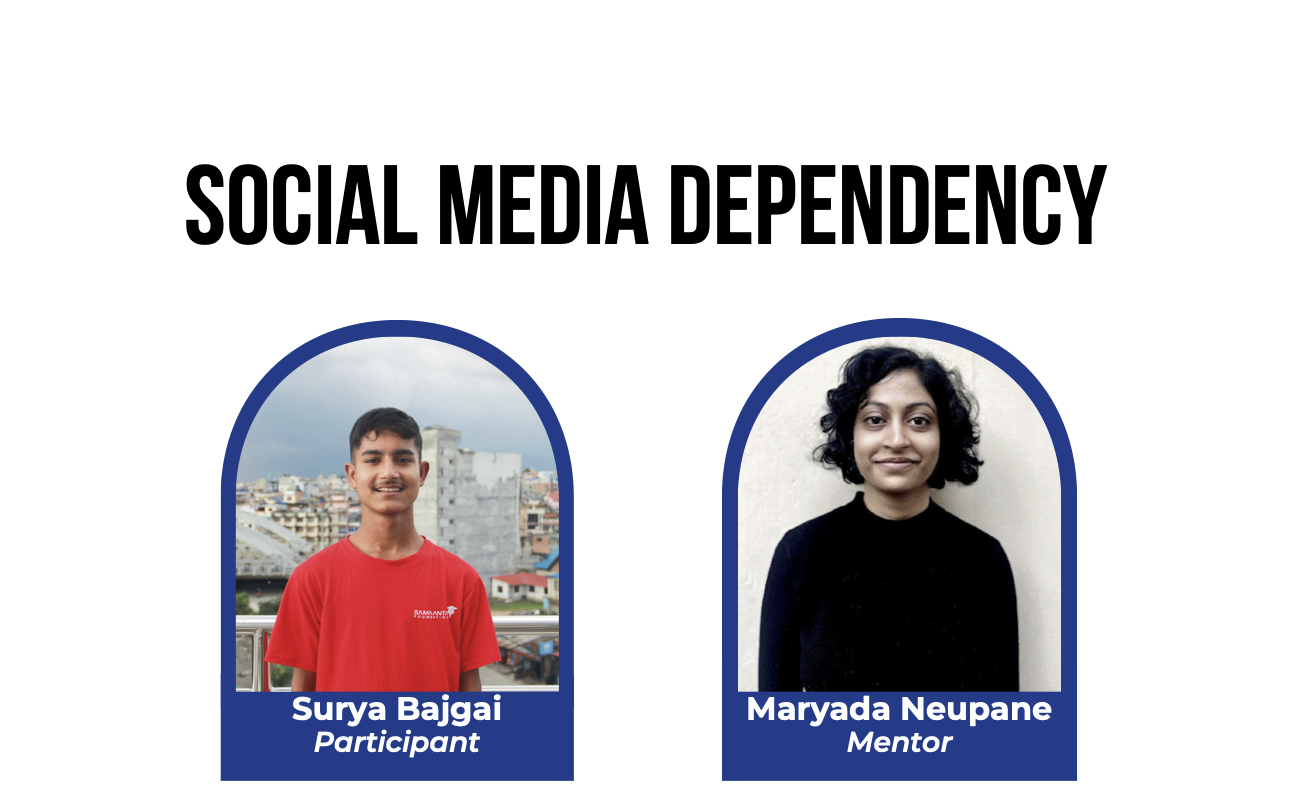
<ul><li>Aim: to make students aware of the over- use and over consuming of social media and its impacts on their mental health.</li><li> Approach 1 - Survey: Among students by asking questions regarding social media usage before and after the session. </li><li>Approach 2 - Implementation: Presentation about social media addiction and ways to balance it with 200+ students sharing real life examples, data and strategies on how to manage time. </li><li> Learnt time management, digital tools, communication, critical thinking and sense of agency and empowerment</li></ul>
        Concerned by the growing impact of social media on students' mental health, Surya Bajgai led a campaign to reduce digital dependency. He began with a pre-survey to understand how students use social media, then gave a presentation to over 200 peers at Nepal Mega College. Sharing relatable examples, data, and tips for balance, Surya encouraged his audience to think critically about their habits that opened up continued dialogue on tech use.
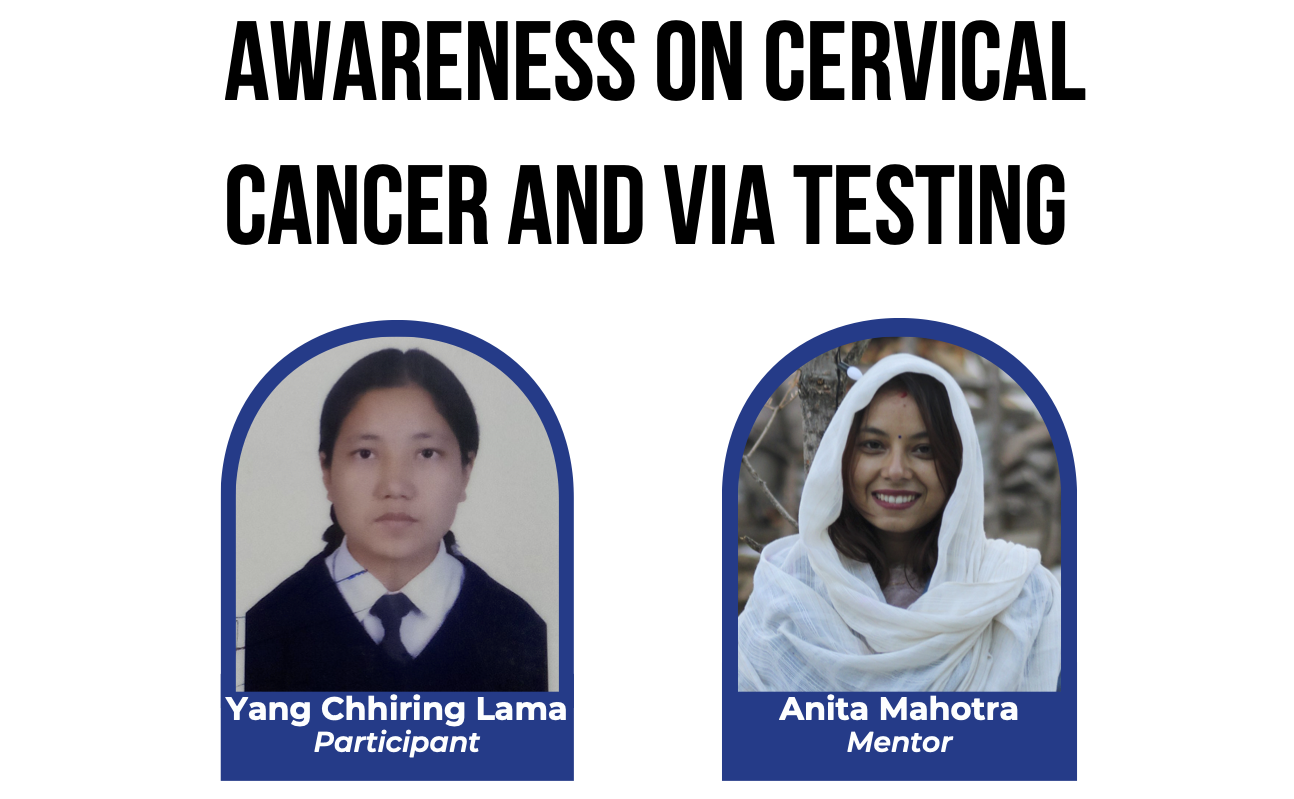
<ul><li>Awareness of 45 young girls on cervical cancer</li><li>Active participation and discussion about the symptoms, screening methods and treatment</li><li>Tackling taboo and shyness: Positive attitude towards cervical cancer screening</li></ul>
        Yang Chhiring’s project addressed a critical gap in reproductive health education by raising awareness about cervical cancer among young women. Recognizing that the topic is rarely covered in school curricula, she led an interactive session with 45 girls, creating space for open dialogue around symptoms, screening methods, and treatment. Participants actively engaged with the material, overcoming initial hesitation and developing a more positive attitude toward cervical cancer screening. Yang Chhiring found joy in educating others and hopes to continue making health information more accessible in her community.
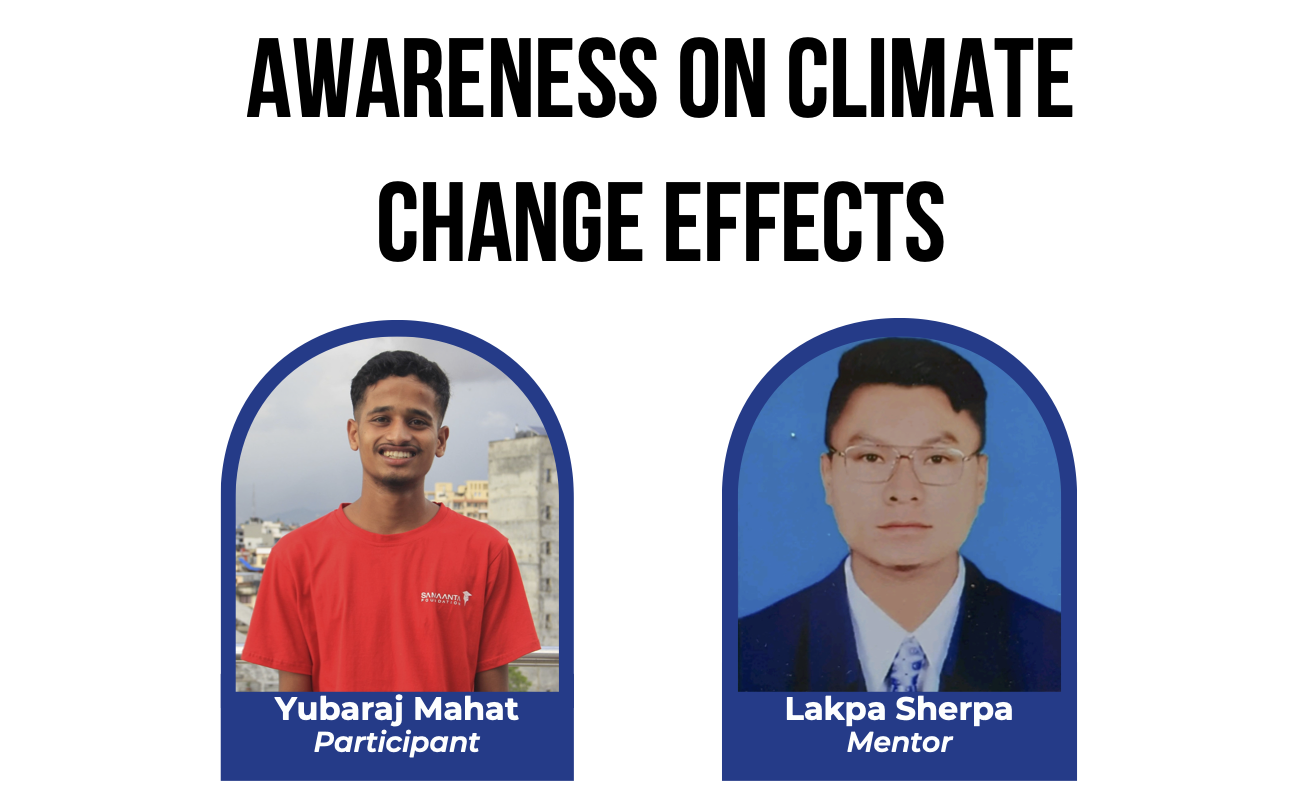
<ul><li>2 implementations involving 56 participants in his community</li><li>Helped them formed a local environment club in the community school to continue to work long term</li><li>Learnt problem solving, leadership, networking, teamwork (working with 2 other fellows to implement) and communication</li></ul>
        Motivated by a desire to understand how climate change affects society and to contribute to social change, Yubaraj organized two awareness sessions on climate change and its local impacts. Working with two other Fellows, he facilitated sessions for 56 participants and later helped form a local environment club at a school in his community to ensure long-term engagement. Yubaraj learned valuable skills in leadership, teamwork, networking, and communication, and was proud to help create a platform for environmental advocacy that could sustain itself beyond the project.
View full presentations here
ParticipantMentorProject
Bipana TamangSikhar SwarStress and Stress Management
Chahana TamangTilak DhitalGender Equality: Solving Problem of Witchcraft
Gagan RaiManoj ThapaLets Get Aware about alcoholism
Kiran GautamEmon DhunganaMental Health and Substance Use, Finding Support and Balance
Kritika BoharaChhiring LamaChild Marriage
Mamita GiriPramesh BhattaraiGender Discrimination in Education
Mandira TamangPrerana KharelFighting Caste Discrimination
Prabin BKSujata ShakyaCaste Discrimination
Pratik NepaliSamikshya KafleUnderstanding Child Psychology and Societal Responsibilities
Sabita BhandariSuraj ParajuliMestrual Hygiene and Health
Sabita GiriAsmita BhandariMalnutrition
Subanee AcharyaPrajjwal UpretiAnti-clickbait Campaign
Subekshya BhandariBiswash ChepangGlobal Warming
Suraj YadavDixit KCEk Sapeta Thau Me Ek Rukh
Surya BajgaiMaryada NeupaneSocial Media Dependency
Yang Chhiring LamaAnita MahotraAwareness on Cervical Cancer and VIA testing
Yubaraja MahatLakpa SherpaAwareness on Effects of Climate Change